The Cost of Violence, the Value of Peace: Why Investing in Peace Makes Economic Sense
International Day of Peace 2026
By Amb. Moses ABOLADE, Executive Director, PEPNET
Peace is often described as a moral imperative.
It is.
But peace is also an economic imperative.
Every conflict carries a bill. It is paid through lives lost, businesses disrupted, schools closed, communities displaced, infrastructure destroyed, public resources diverted, investment delayed, and opportunities abandoned.
The question for Nigeria, West Africa, Africa and the wider world is therefore not simply:
How much does peace cost?
It is:
How much does violence cost us, and what could we achieve if more of those resources were invested in preventing violence in the first place?
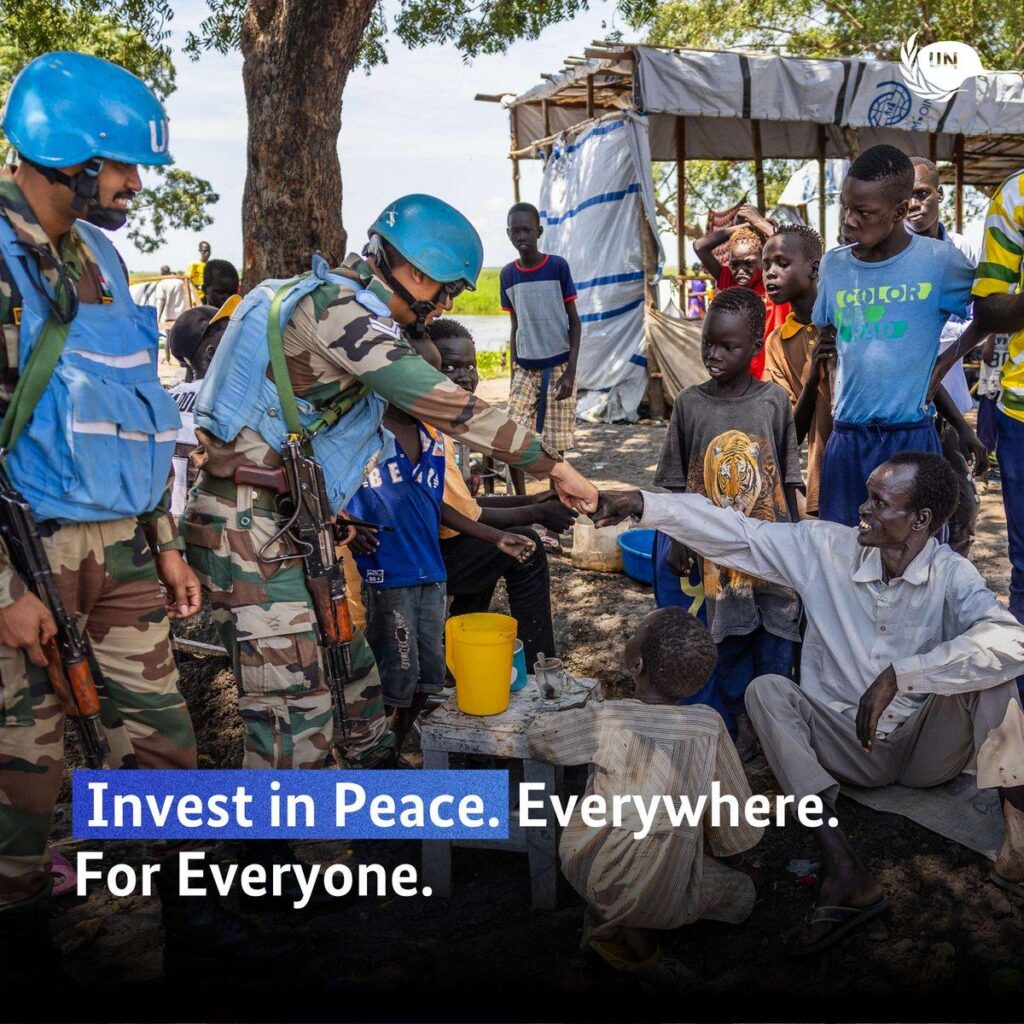
This year’s International Day of Peace theme, “Invest in Peace: For Everyone, Everywhere, Every Day,” provides an important opportunity to ask exactly that question. The United Nations describes peace as a foundation for safety, dignity, opportunity and cooperation.
The global cost of violence is enormous
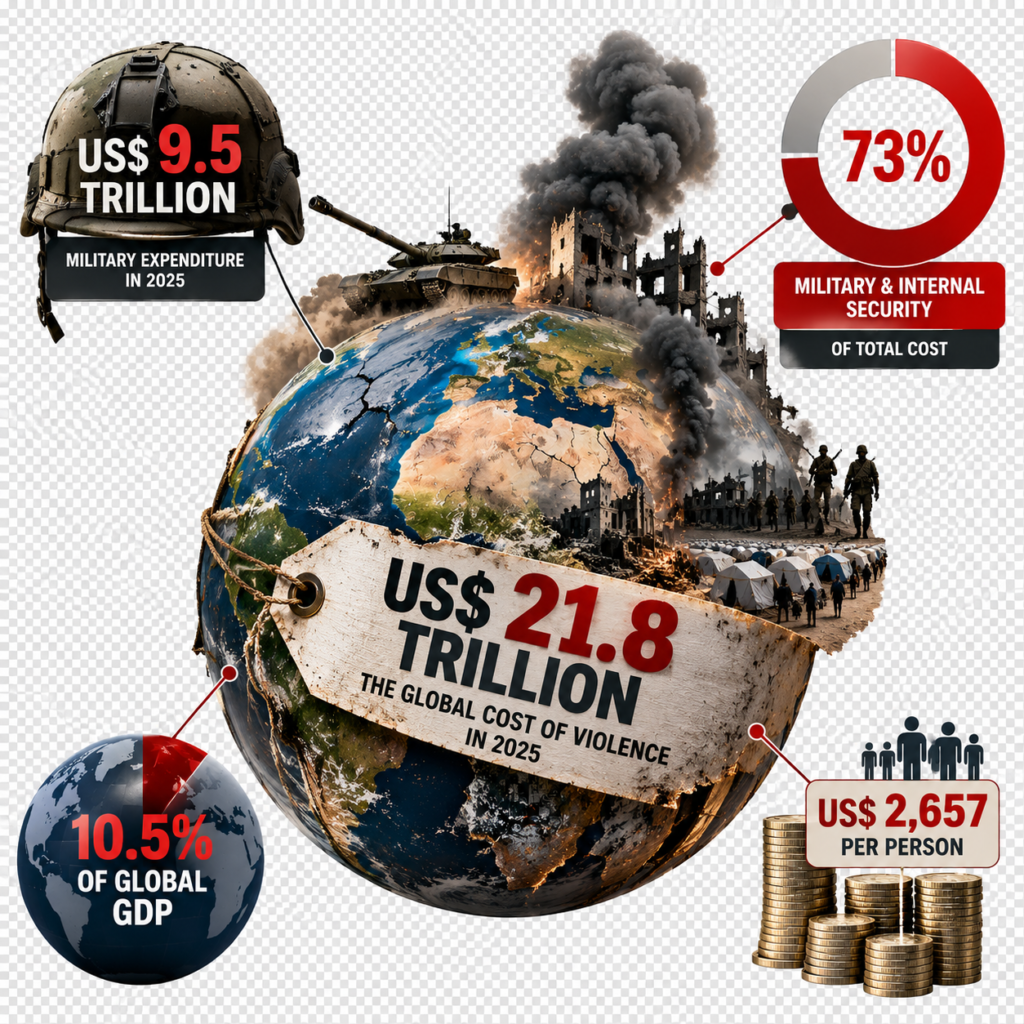
According to the Global Peace Index 2026, the global economic impact of violence reached approximately US$21.8 trillion in 2025, equivalent to 10.5% of global GDP, or about US$2,657 per person.
This figure includes much more than the cost of war. The Global Peace Index methodology incorporates the economic impact of military expenditure, internal and private security, violent crime, homicide, armed conflict, terrorism, conflict deaths, displacement and other consequences of violence.
In 2025 alone:
These figures do not mean that all military or security spending is “wasted”. States have a legitimate responsibility to protect their citizens.
The point is different:
Violence creates a massive economic burden, while prevention can protect resources before they are consumed by crisis.
Africa pays a particularly heavy price
The challenge is especially serious in Africa.
The Global Peace Index 2025 estimated the economic impact of violence in sub-Saharan Africa at US$648.65 billion in 2024, equivalent to approximately 5% of the region’s economic output.
And the cost is not simply military.
In sub-Saharan Africa, the 2024 economic impact of violence comprised approximately:
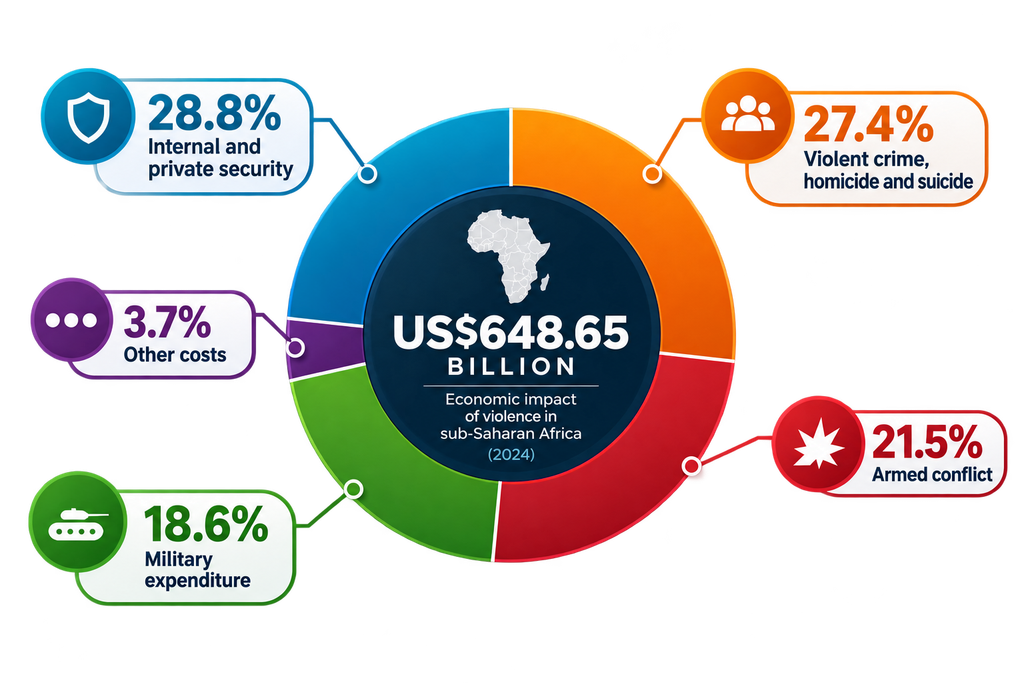
This matters because it demonstrates that insecurity is not only a battlefield issue.
It is also a development issue.
When violence increases, societies spend more protecting what they have and less building what they need.
The African Development Bank similarly reports that conflict reduces annual GDP growth in Africa by an average of 2.5 percentage points. At the same time, insecurity diverts public resources towards security expenditure at the expense of social and productive investment. The Bank estimates that African military expenditure reached US$52.1 billion in 2024.
West Africa cannot separate peace from prosperity
The Sahel demonstrates this connection clearly.
The IMF’s 2026 assessment of the West African Economic and Monetary Union warns that continuing security and political instability in the Sahel could disrupt investment, growth and trade, increase refugee and internally displaced populations, put additional pressure on public finances and threaten social stability.
ECOWAS has also identified terrorism, violent extremism, organised crime, conflict, climate pressures, poverty and inequality among the interconnected threats affecting peace and human security in West Africa.
This is why peace is not an issue for the security sector alone.
It is an issue for:
Finance.
Agriculture.
Education.
Health.
Trade.
Infrastructure.
Youth employment.
Private investment.
Regional integration.
When insecurity prevents a farmer from reaching a farm, it is an agricultural problem.
When insecurity prevents a truck from moving safely across a border, it is a trade problem.
When insecurity closes a school, it is a human-capital problem.
When insecurity causes an investor to postpone a project, it is an investment problem.
And when government must continually divert scarce resources towards responding to crises, it becomes a development problem.
Nigeria: the opportunity cost is the real conversation
Nigeria illustrates the dilemma.
The African Development Bank published research estimating that terrorism reduced Nigeria’s GDP by approximately 0.82% per year in its historical model, while also finding evidence that terrorism crowded out private investment and altered government spending towards defence. This was a 2017 study, so the figure should not be treated as a current estimate.
The lesson, however, remains important:
Violence does not only destroy wealth. It changes where society is able to invest its wealth.
The Nigerian Government’s enacted 2026 budget is ₦68.32 trillion. The government has also explicitly linked national security with development and included community-based peacebuilding and conflict prevention among its stated priorities.
The important question is therefore not whether Nigeria should invest in security.
It must.
The question is:
How do we combine security spending with sufficient investment in prevention, social cohesion, early warning, dialogue, peace education, inclusive development and conflict transformation so that we reduce the conditions that repeatedly generate insecurity?
That is where the economics of prevention becomes important.
Prevention can have a very high return
One of the strongest international economic arguments for peacebuilding comes from the World Bank and United Nations’ Pathways for Peace study.
It estimated that a scaled-up system of preventive action could save US$5 billion to US$70 billion every year, resources that could otherwise be invested in poverty reduction and human development.
The study also reviewed evidence showing that prevention can be considerably more cost-effective than responding after violence has escalated.
One historical analysis of Rwanda estimated a 1:16 cost-effectiveness ratio for peacebuilding between 1995 and 2014: approximately US$1 invested in peacebuilding was associated with US$16 in avoided costs over the period studied. This is a historical case study, not a universal ROI for peacebuilding.
More recently, an IMF working paper modelled the potential long-term returns from conflict-prevention policies.
Its simulations estimated returns of approximately US$26 to US$75 for every US$1 invested in countries without recent violence, and potentially up to US$103 per US$1 in countries that had recently experienced violence.
These are modelled estimates, not guaranteed financial returns.
But the message is powerful:
The earlier societies address the drivers of violence, the greater the potential economic savings.
The world’s major institutions are already recognising this
This is not merely the language of peace organisations.
The United Nations has placed investment in peace at the centre of this year’s International Day of Peace and continues to support prevention through its Peacebuilding Fund. Since 2006, the Fund has supported 75 countries and territories and invested more than US$2 billion in peacebuilding.
The World Bank has increasingly connected conflict prevention, inclusion, development and economic resilience, arguing that development policy can be an important part of preventing violent conflict.
The IMF has examined conflict prevention not simply as a political or humanitarian concern but as a macroeconomic issue, including its effects on growth, fiscal stability and investment.
The African Development Bank has warned that conflict and insecurity divert scarce African resources away from productive and social investment and undermine the continent’s development prospects.
And ECOWAS continues to invest in regional mechanisms addressing terrorism, conflict prevention, peacebuilding and security because instability in one part of West Africa can generate economic and humanitarian consequences far beyond the immediate conflict zone.
So, what is the ROI of peace?
There is no single universal number.
And we should be cautious about reducing peace to a financial calculation.
The value of a life saved cannot be adequately expressed in naira or dollars.
But we can measure the economic benefits of preventing violence.
Investment in peace can help protect:
This is the peace dividend.
Sometimes the return on peace is money earned.
Sometimes it is money saved.
And sometimes it is a crisis that never happens.
That last form of return is the hardest to measure.
If a conflict is prevented, there may be no destroyed infrastructure to rebuild, no displaced population to resettle, no emergency humanitarian response to finance and no lost economic output to recover.
Prevention succeeds quietly.
Peace is not an expense. It is risk management.
For Nigeria and Africa, investing in peace should therefore not be seen as competing with development.
It protects development.
Peace education can be an investment in prevention.
Early warning can be an investment in prevention.
Youth participation can be an investment in prevention.
Women’s participation can be an investment in prevention.
Community dialogue can be an investment in prevention.
Inclusive governance can be an investment in prevention.
Conflict-sensitive development can be an investment in prevention.
Local mediation can be an investment in prevention.
Social cohesion can be an investment in prevention.
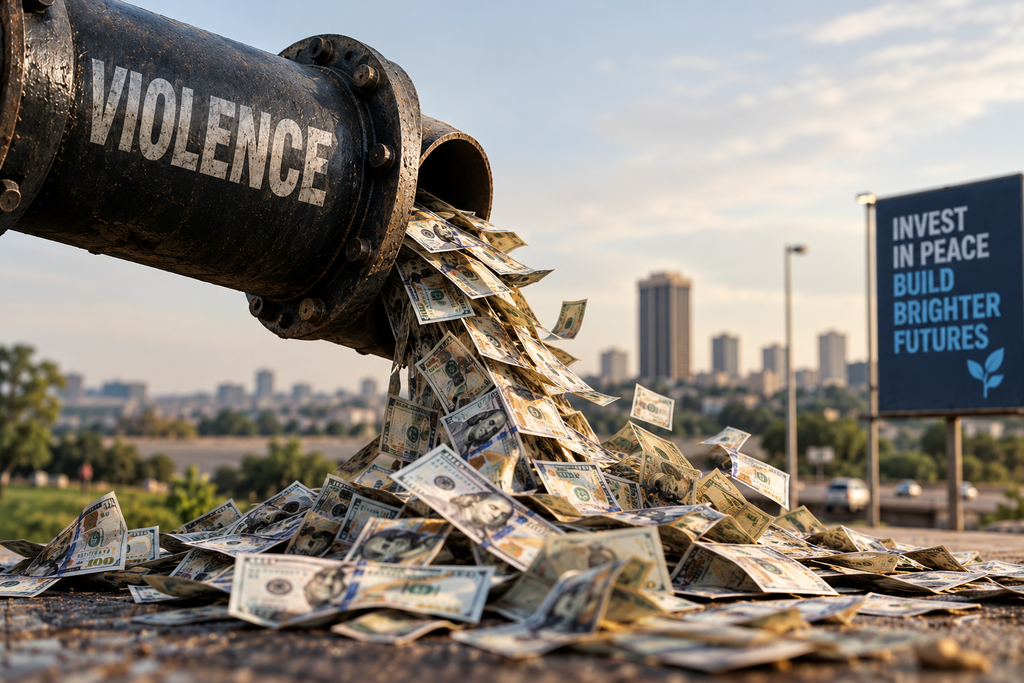
And when these investments prevent violence, the economic benefits extend far beyond the immediate peacebuilding programme.
The question we should be asking
On this International Day of Peace, perhaps we should stop asking only:
“How much will it cost to invest in peace?”
And ask:
“How much will it cost if we do not?”
Because the cost of violence is measured not only in billions of dollars.
It is measured in children who cannot attend school.
Farmers who cannot cultivate.
Businesses that cannot operate.
Families that are displaced.
Young people whose opportunities disappear.
Infrastructure that has to be rebuilt.
Public money diverted from development.
Investments that never happen.
And lives that cannot be restored.
Peace is priceless in human terms.
But the evidence increasingly demonstrates that investing in peace can also make strong economic sense.
The smartest security strategy is therefore not only to respond effectively when violence occurs.
It is to invest early enough to reduce the likelihood, scale and duration of violence in the first place.
This International Day of Peace, let us therefore move beyond celebrating peace as an ideal.
Let us treat peace as an investment.
For Nigeria.
For West Africa.
For Africa.
And for everyone, everywhere, every day.
Happy International Day of Peace 2026.
References