By Joy Obadiah
For Peace Education and Practice Network (PEPNET)
9 September 2026
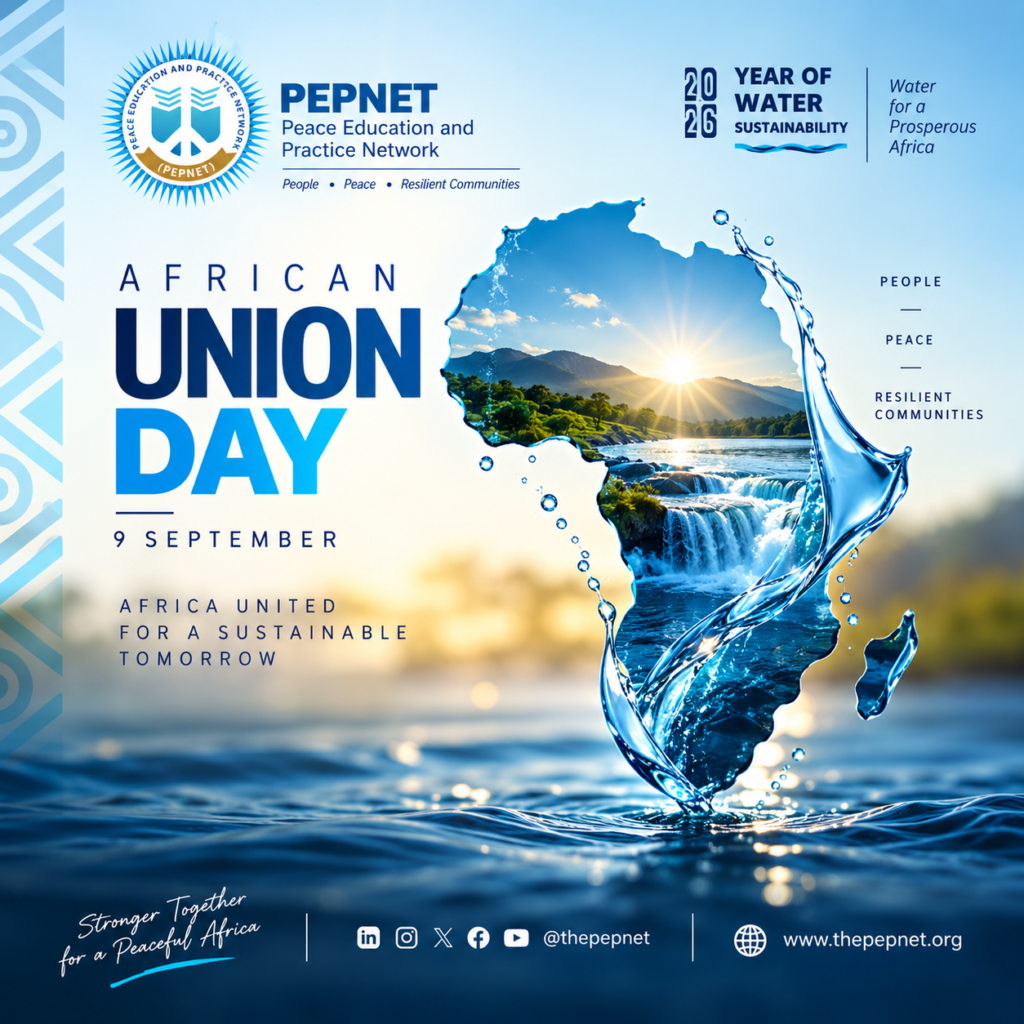
On 9 September, Africans across the continent and the Diaspora commemorate African Union Day, marking a defining moment in Africa’s journey towards deeper unity, integration and collective action.
The date commemorates the Sirte Declaration of 1999, through which African leaders took the decisive step towards establishing the African Union as an instrument for accelerating continental integration and strengthening Africa’s capacity to address its shared challenges and advance its place in the world.
But African Union Day should be more than a commemoration of a historic decision.
It should invite us to reflect seriously on what African unity must mean in practice today.
At a time when the continent is navigating persistent conflicts, climate pressures, inequality, displacement, economic uncertainty and growing demands from a young and increasingly connected population, the case for stronger African cooperation has perhaps never been more compelling.
The question before us is not simply whether Africa should be united.
The more important question is what our unity must enable us to achieve.
For PEPNET, the answer must include building a continent where peace is actively cultivated, human dignity is protected, young people are empowered, communities are resilient and sustainable development reaches the people whose lives it is intended to transform.
Africa’s diversity is one of its greatest strengths.
Our continent is home to thousands of cultures, languages, histories and identities. African unity, therefore, should never mean uniformity. It should mean recognising our interconnectedness and developing the capacity to act collectively where our challenges and aspirations are shared.
And many of them are.
Conflict crosses borders.
Climate change does not stop at national boundaries.
Rivers, lakes and ecosystems connect countries.
Food insecurity and displacement have regional consequences.
Economic shocks travel quickly across societies.
The future of Africa’s young people is increasingly shaped by forces that no country can effectively address alone.
This is why the African Union’s vision of an integrated, prosperous and peaceful Africa, driven by its own citizens, remains so significant. Agenda 2063 provides a continental framework for translating the Pan-African aspirations of unity, collective prosperity, development, peace and security into practical transformation.
Yet continental visions only become meaningful when they improve the lives of people.
Unity must therefore move from aspiration to action.
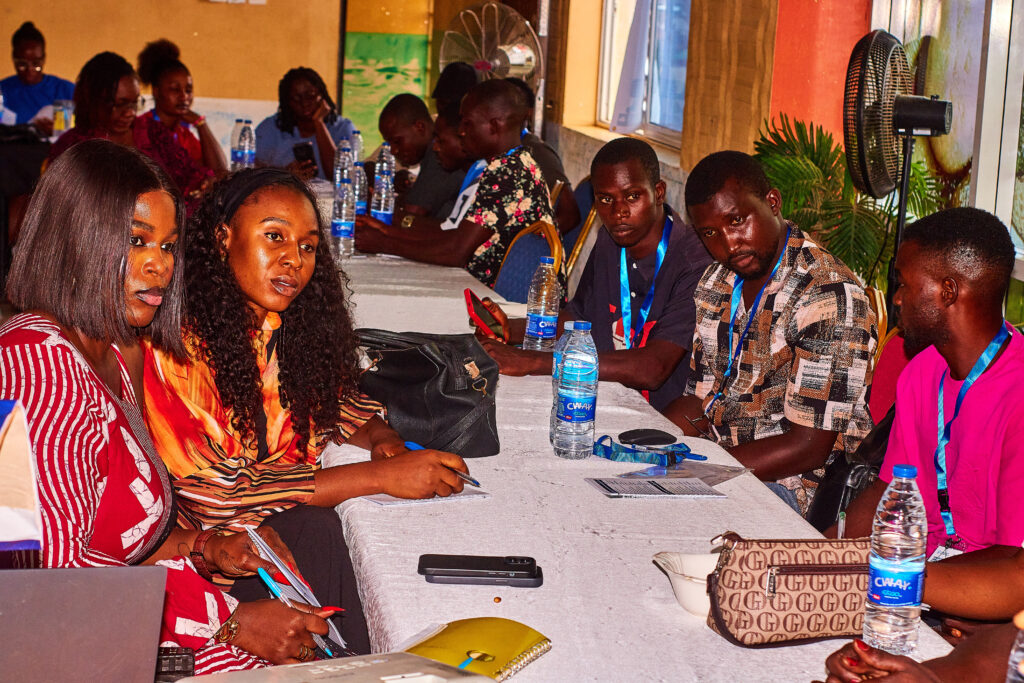
It must be reflected in stronger cooperation between African societies and institutions. It must create opportunities for young people. It must strengthen communities facing shared threats. And it must help Africans build a future in which peace and prosperity are not privileges for a few, but possibilities for all.
There can be no meaningful African transformation without peace.
But peace must be understood in its fullest sense.
A peaceful Africa is not simply an Africa without war.
It is an Africa where people can live with dignity and security. Where differences can be managed without violence. Where communities have the capacity to address grievances constructively. Where young people can see meaningful possibilities for their future. Where women and men can participate in shaping decisions that affect their lives.
This understanding places peacebuilding at the centre of Africa’s transformation.
Peace is not something that begins only when violence has already occurred.
It is built long before conflict escalates.
It is built through inclusive institutions.
Through education.
Through dialogue.
Through justice and participation.
Through stronger relationships across social and cultural divides.
And through communities that have the knowledge, skills and confidence to respond constructively to the challenges they face.
This is why peace education matters.
Education should not only prepare young people for employment. It should also prepare them for citizenship, coexistence and responsible leadership.
Young people must be equipped to think critically, engage differences respectfully, reject violence and contribute creatively to solving the problems within their communities.
The Africa we want will depend not only on the infrastructure we build, but also on the values, relationships and capacities we nurture.
This year’s African Union Day carries additional significance within the context of the African Union’s 2026 Theme of the Year: “Assuring Sustainable Water Availability and Safe Sanitation Systems to Achieve the Goals of Agenda 2063.”
The African Union has elevated water and sanitation as major continental priorities, recognising their importance for public health, economic transformation, food systems, climate resilience and regional stability. The 2026 agenda also explicitly encourages stronger connections between water governance and sectors including climate change, agriculture, energy, peace and security.
For PEPNET, this is an important peacebuilding conversation.
Water is not only a development issue. It is a human security issue.
Access to water affects health, livelihoods, agriculture, education and economic opportunity. Climate-related droughts, floods and environmental disruptions can place additional pressure on already vulnerable communities.
Where resources become scarce and inequalities deepen, tensions can become more difficult to manage.
But shared resources can also create opportunities.
They can bring communities together around common interests.
They can encourage cooperation across boundaries.
They can create spaces for dialogue and collective problem-solving.
The future of peacebuilding in Africa must therefore increasingly recognise the connections between people, peace, climate and natural resources.
We cannot build sustainable peace while ignoring the environmental conditions that affect people’s security and livelihoods.
Neither can we pursue development without understanding the social and conflict dynamics that shape communities.
The challenges are interconnected.
Our responses must become more interconnected too.
Agenda 2063 represents an ambitious vision for Africa’s future.
But its success will not be measured primarily by the quality of continental declarations.
It will be measured by what changes in the lives of ordinary Africans.
Will communities become safer?
Will young people have greater opportunities?
Will women and marginalised groups have meaningful participation?
Will societies become more resilient to climate and economic shocks?
Will conflicts be prevented before they become violent?
Will citizens feel that they have a genuine stake in shaping Africa’s future?
These questions bring Agenda 2063 from the continental level to the community level.
Because the Africa we want must be built where people live.
In schools.
In communities.
In families.
In local institutions.
In youth groups.
In civic spaces.
And in the everyday decisions through which people choose cooperation over division and dialogue over violence.
Continental transformation requires local ownership.
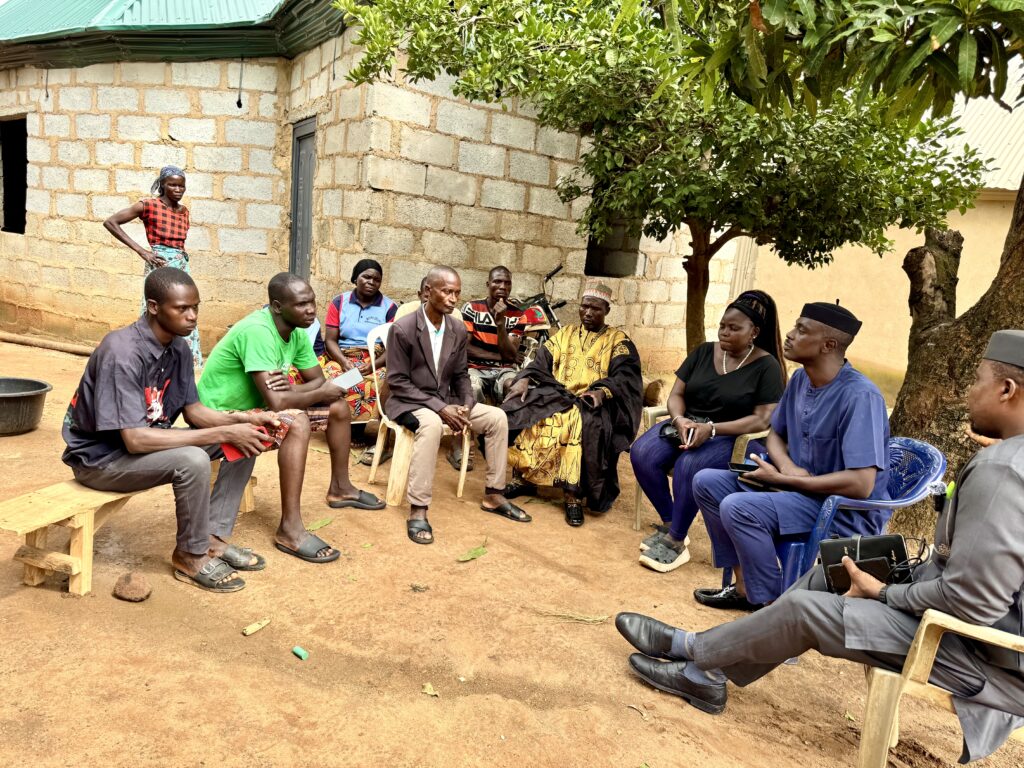
Communities should not simply be treated as beneficiaries of Africa’s development agenda. They must be recognised as active participants and co-creators of the future.
Africa’s young people are central to the continent’s future.
But they should not only be described as the leaders of tomorrow.
They are already leaders today.
Across the continent, young Africans are building initiatives, creating solutions, organising communities, using technology, promoting peace and challenging old assumptions about what is possible.
What they need is greater opportunity, meaningful participation and supportive systems that enable their ideas and leadership to flourish.
Young people should not be invited into African conversations merely as symbolic representatives.
They must have genuine influence.
They must be trusted with responsibility.
And they must be equipped with the knowledge and skills required to lead through complexity.
Investing in young people is therefore not simply a demographic necessity.
It is a peacebuilding and development imperative.
A generation that has hope, agency and a sense of belonging is better positioned to contribute positively to society.
The future of Africa cannot be outsourced.
Partnerships with the wider world remain important, and Africa must continue to engage globally. But the responsibility for shaping the continent’s future belongs first and foremost to Africans themselves.
That responsibility belongs to governments and continental institutions.
But it also belongs to citizens.
To educators.
To community leaders.
To civil society.
To young people.
To the media.
To researchers.
To entrepreneurs.
And to peacebuilders.
African Union Day should therefore remind us that Pan-Africanism is not only a political idea.
It is also a responsibility to one another.
A responsibility to recognise that our futures are connected.
A responsibility to reject the belief that another person’s insecurity has nothing to do with us.
A responsibility to build bridges where others build walls.
And a responsibility to contribute, in whatever space we occupy, to a more peaceful and prosperous Africa.
At the Peace Education and Practice Network, we believe that sustainable transformation begins with people.
It begins with how people understand themselves and one another.
How communities respond to differences.
How young people are prepared for leadership.
How conflicts are understood and transformed.
And how societies develop the resilience to respond to emerging challenges.
Our commitment remains rooted in advancing:
Peace Education. Peacebuilding. Conflict Transformation. Youth Development. Leadership. Human Security. Community Resilience.
As Africa commemorates this important day, PEPNET renews its commitment to contributing to a continent where peace is not merely discussed at conferences but practised in communities.
A continent where young people are recognised as partners in transformation.
A continent where diversity becomes a source of strength.
A continent where development is conflict-sensitive, inclusive and sustainable.
And a continent where the vision of The Africa We Want becomes increasingly visible in the everyday lives of its people.
African Union Day is ultimately a reminder that Africa’s future is not already written.
It is being shaped now.
By the choices we make.
By the values we promote.
By the leaders we support.
By the institutions we strengthen.
By the conflicts we prevent.
And by the generations we prepare.
The Africa we want will not emerge by chance.
It must be intentionally built.
Built through unity that goes beyond rhetoric.
Built through peace that goes beyond the absence of violence.
Built through development that protects both people and planet.
Built through leadership that listens.
And built through citizens who understand that Africa’s future is a shared responsibility.
On this African Union Day, PEPNET joins Africans everywhere in celebrating the continent’s resilience, diversity and extraordinary potential.
But we also renew a commitment to the work ahead.
To build peace.
To strengthen communities.
To empower young people.
To advance sustainable solutions.
And to work together for the Africa we want.
About the Author
Joy Obadiah is the Administrative Secretary and Virtual Assistant at the Peace Education and Practice Network (PEPNET). She is an administrative professional with experience in executive support, stakeholder coordination, documentation, communications support and efficient organisational operations. She also supports PEPNET’s work and commitment to advancing peace education and building a more peaceful and sustainable society.
For Peace Education and Practice Network (PEPNET)
🌐 Visit PEPNET
📱 Follow PEPNET: @thepepnet