Abuja, Nigeria | 27 July 2026
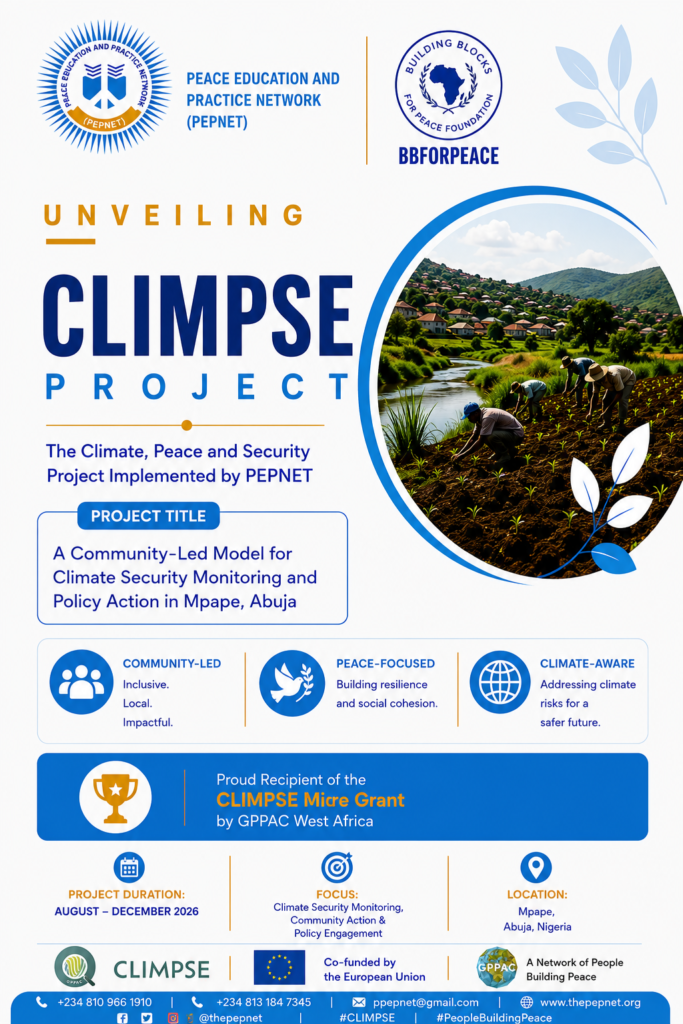
The Peace Education and Practice Network (PEPNET) is pleased to officially unveil the Climate, Peace and Security (CLIMPSE) Project, a landmark initiative that seeks to strengthen community resilience by promoting climate security monitoring, community action and policy engagement across selected communities in Mpape, Abuja.
Implemented under the CLIMPSE Micro Grant of GPPAC West Africa and co-funded by the European Union, the project is titled:
The initiative reflects PEPNET’s commitment to advancing locally driven solutions at the intersection of climate change, peacebuilding and human security. As climate-related risks continue to threaten lives, livelihoods and social cohesion across Nigeria, the CLIMPSE Project seeks to empower communities to identify risks, strengthen resilience, influence policy and lead sustainable climate action from the grassroots.
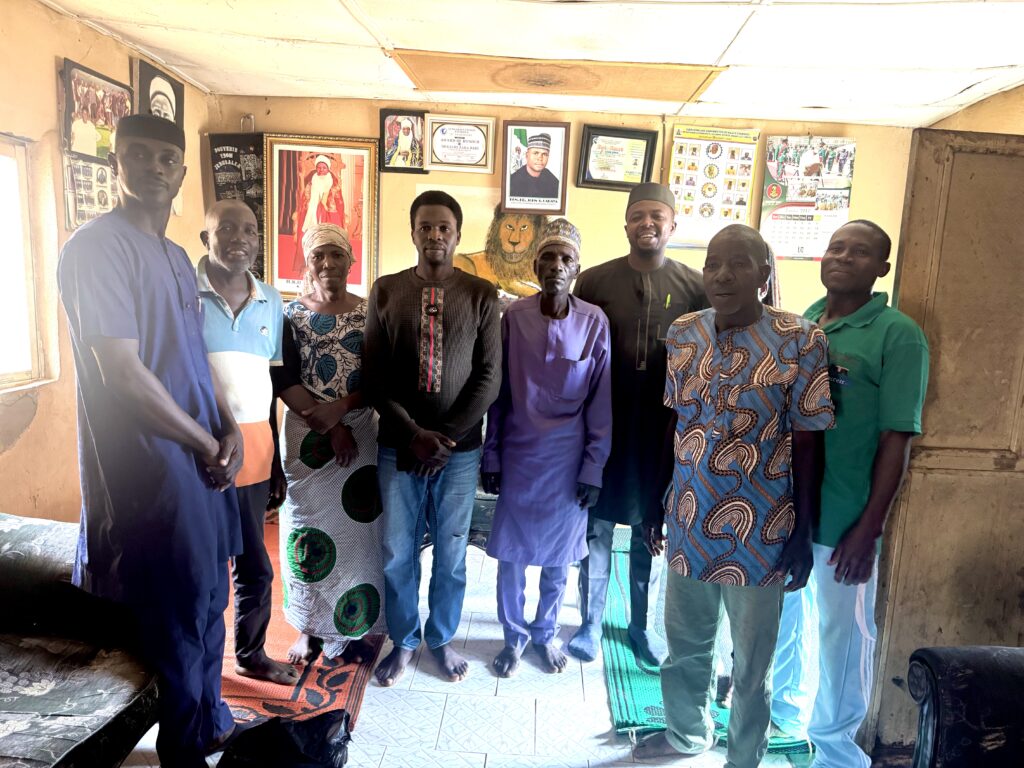
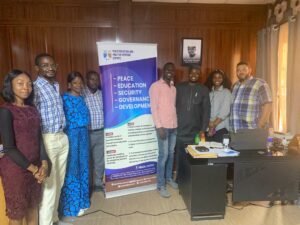
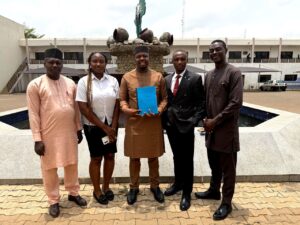
In line with its community-centred approach, PEPNET commenced the project’s stakeholder engagement activities on 23 July 2026, undertaking a series of consultations across Katampe 1, Katampe 2, Berger Quarry and Mapa-Mashafa Communities within the Mpape axis of the Federal Capital Territory.
The engagements brought together traditional leaders, youth leaders, women representatives, religious leaders, community-based organisations and other key stakeholders in an atmosphere of dialogue, trust and shared learning.
Rather than arriving with predetermined solutions, the PEPNET team listened to community members as they shared first-hand accounts of the environmental and climate-related challenges affecting their everyday lives.
The consultations revealed distinct but interconnected challenges across the communities.
In Katampe 1 and Katampe 2, residents highlighted persistent flooding, indiscriminate waste disposal, poor drainage systems and increasing environmental degradation. Community members explained how these challenges continue to damage infrastructure, threaten public health and disrupt economic activities, particularly during the rainy season.

In Berger Quarry, stakeholders expressed deep concerns over the impacts of quarry and mining operations. Residents described recurring ground tremors, environmental degradation, dust pollution and other consequences that continue to affect community wellbeing, safety and livelihoods.
The consultation in Mapa-Mashafa was particularly moving. Community members recounted the devastating impact of the Mashafa River, which has reportedly claimed more than five lives over the years. The river continues to disrupt access to schools, limit economic opportunities, affect mobility during the rainy season and hinder broader community development. Residents spoke passionately about the urgent need for practical interventions that prioritise both environmental protection and human security.
These conversations further reinforced the reality that climate change is not merely an environmental issue. It is increasingly a driver of insecurity, displacement, inequality and vulnerability, requiring integrated, locally owned and peace-centred responses.
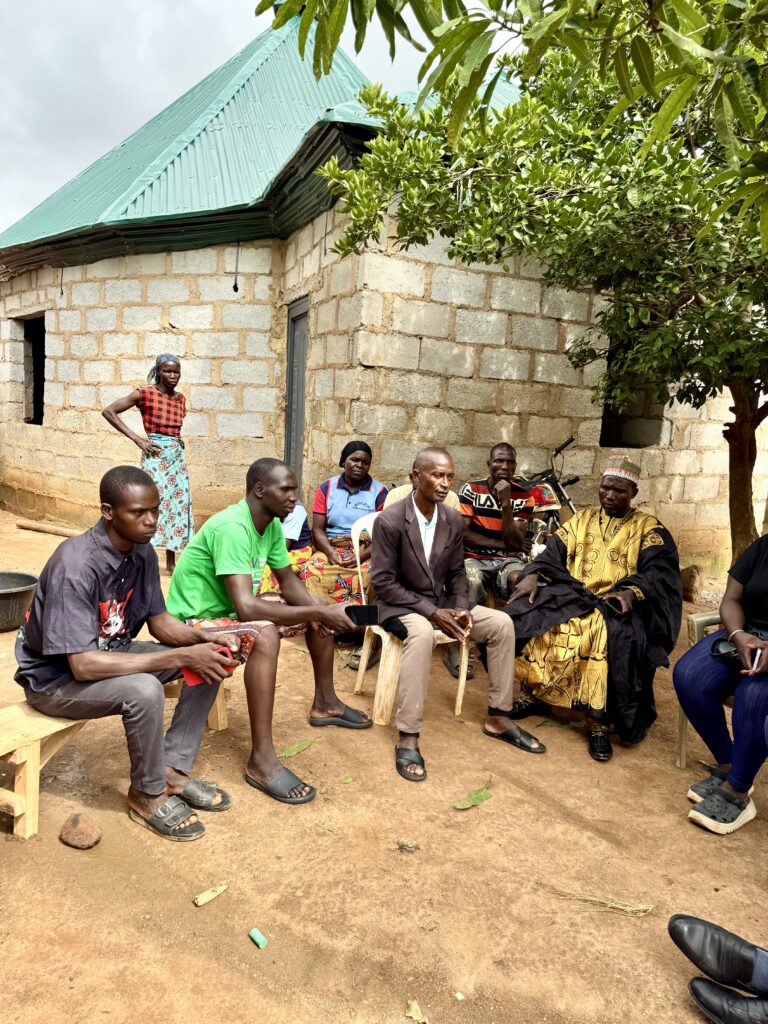
The stakeholder engagement also served as an opportunity to formally introduce the CLIMPSE Project to the participating communities and mobilise local ownership of the initiative.
Each community was invited to nominate representatives to participate in the forthcoming Climate, Peace and Security Training scheduled for August 2026.
The training will equip participants with practical knowledge and skills on climate security, conflict sensitivity, environmental stewardship, early warning, community action and policy engagement. Following the training, participants will serve as Climate Peace Circle Champions, working within their communities to promote climate awareness, strengthen resilience, facilitate dialogue and champion locally led solutions that contribute to lasting peace and sustainable development.
PEPNET believes that empowering local leaders and community volunteers is fundamental to creating sustainable systems capable of responding effectively to climate-related risks.
The stakeholder visits were warmly received across all four communities and demonstrated the value of inclusive engagement in designing effective development interventions.
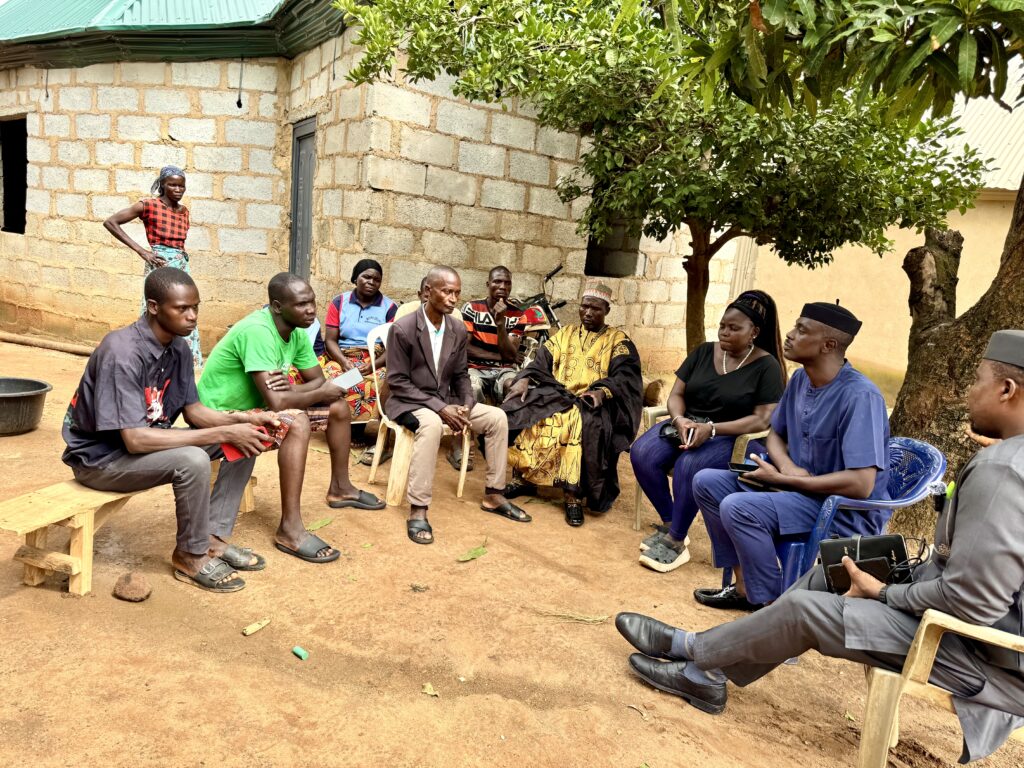
The openness, sincerity and willingness of community members to share their lived experiences created a strong foundation for collaboration and mutual learning. The consultations also underscored the importance of recognising local knowledge as an essential component of climate security programming.
For PEPNET, meaningful climate action cannot succeed without the active participation of the people most affected. Community ownership, local leadership and continuous dialogue remain central to the implementation of the CLIMPSE Project.
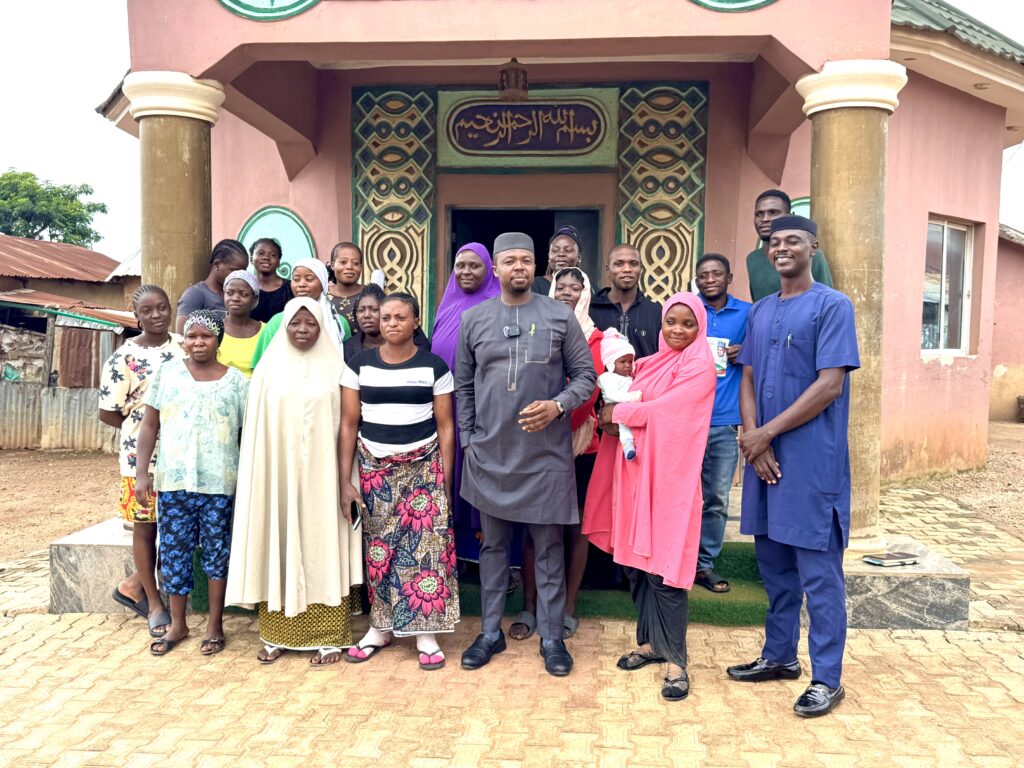
As implementation progresses over the coming months, PEPNET will continue working closely with communities, traditional institutions, government agencies, civil society organisations and development partners to strengthen climate resilience, improve climate security monitoring and promote evidence-based policy engagement.
The CLIMPSE Project represents more than a development initiative. It is an investment in people, partnerships and community resilience. By placing local voices at the heart of climate action, the project aims to contribute to safer, more peaceful and environmentally sustainable communities.
Together, we can transform climate challenges into opportunities for resilience, collaboration and lasting peace.
Communications Department
Peace Education and Practice Network (PEPNET)
Building Peace Together, One Member, One Voice.
One Response
This is a great initiative especially the involvement of community stakeholders to take ownership of the project and be champion of climate peace
Kudos to the initative