16 June 2026 | Abuja, Nigeria
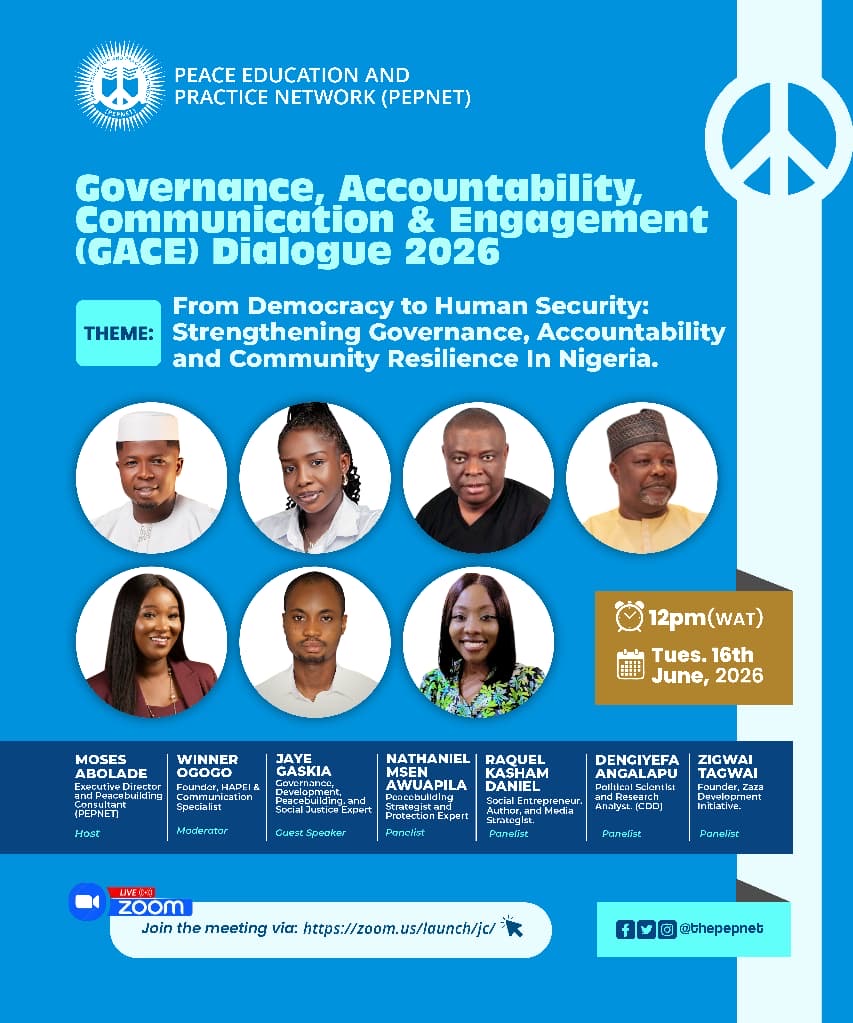
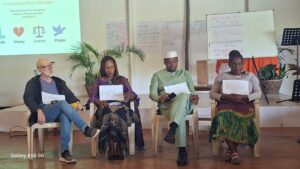
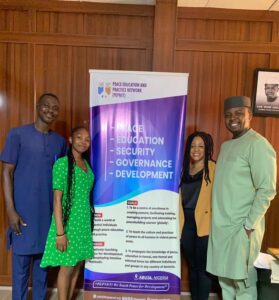
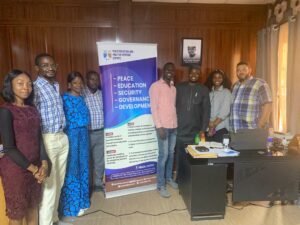
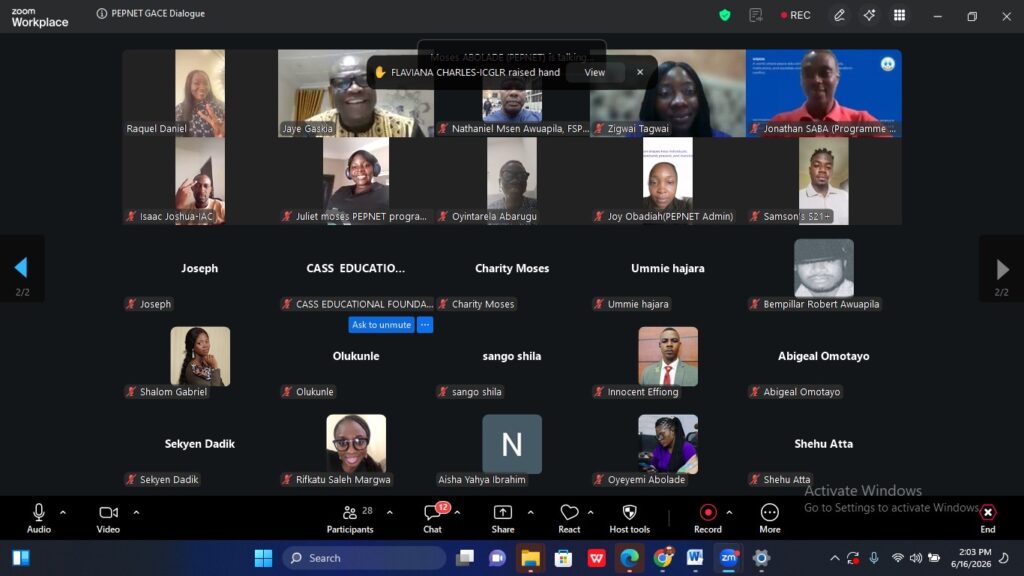
The Governance, Accountability, Communication and Engagement (GACE) Dialogue 2026 was successfully held on 16 June 2026, bringing together policymakers, development practitioners, researchers, civil society organisations, peacebuilders, and governance experts to examine the critical relationship between democracy, human security, accountability, and community resilience in Nigeria.
Held under the theme, “From Democracy to Human Security: Strengthening Governance, Accountability and Community Resilience in Nigeria,” the dialogue provided a platform for meaningful reflection on Nigeria’s governance landscape and the collective actions required to strengthen democratic institutions, promote accountability, and advance sustainable peace and development.
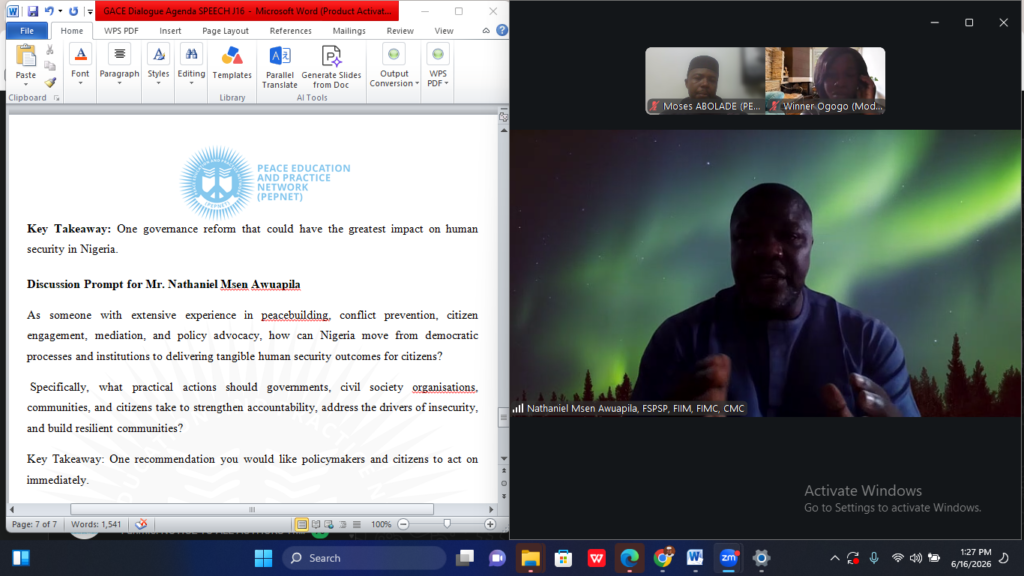
Delivering the keynote address, Mr Jaye Gaskia, a renowned governance and democracy expert, highlighted the interconnectedness of democracy and human security. He noted that Nigeria continues to face challenges arising from governance deficits, uneven development, fragmented state capacity, and persistent insecurity, all of which undermine citizens’ wellbeing and confidence in public institutions.

According to Mr Gaskia, the fundamental purpose of governance is to guarantee the security and welfare of citizens through inclusive leadership, citizen participation, equity, and social justice. He stressed that democratic institutions can only deliver meaningful development when they remain accountable, transparent, and responsive to the needs of the people.
Throughout the dialogue, participants explored the various dimensions of human security, including economic, food, health, environmental, personal, community, and political security. Discussions also underscored accountability as a cornerstone of effective governance, identifying transparency, answerability, and consequences for misconduct as essential principles for strengthening public trust and improving institutional performance.
Panel discussions further emphasised the importance of civic education, public awareness, citizen participation, and institutional effectiveness in deepening democratic governance. Participants were encouraged to actively engage in governance processes, demand accountability from public office holders, and contribute to community-led initiatives that promote peace, resilience, and sustainable development.
Key Recommendations
The dialogue concluded with the following recommendations:
- Strengthen accountability mechanisms through improved transparency, answerability, and appropriate consequences for misconduct.
- Increase public access to governance, policy, and accountability information to promote informed civic participation.
- Encourage active citizen participation and community-led accountability initiatives at all levels.
- Address the root causes of insecurity through inclusive and people-centred democratic governance.
- Ensure that governance processes reflect the voices and perspectives of young people, women, persons with disabilities, and other marginalised groups.
- Expand peace education and civic education in schools and through community-based learning platforms.
- Promote open governance through regular public disclosure of government performance and strengthened public trust.
- Strengthen the role of civil society organisations in citizen mobilisation, monitoring, and advocacy for accountability.
- Foster social cohesion by strengthening local institutions and encouraging collaborative approaches to community challenges.
- Enhance collaboration among government institutions, civil society organisations, communities, academia, the private sector, and development partners to advance human security and sustainable development.
Looking Ahead
Participants concluded that democracy and human security are mutually reinforcing, and that sustainable peace and development depend on accountable institutions, active citizenship, inclusive governance, and strong partnerships across sectors.
The GACE Dialogue continues to serve as an important platform for advancing evidence-informed discussions, policy engagement, and collaborative action towards building a more peaceful, secure, and democratic Nigeria.
Watch the Dialogue
Watch the full GACE Dialogue 2026 and key discussions through the links below:
Report by:
Joy Obadiah
Administrative Secretary
Peace Education and Practice Network (PEPNET)