Theme: “Peace Begins with Us: Investing in Peace Every Day”
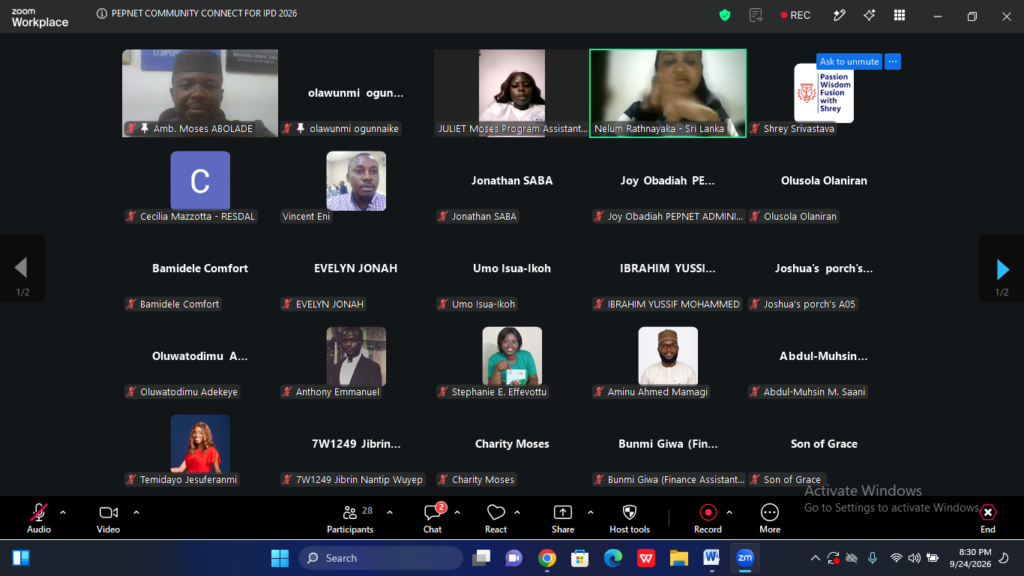
24 September 2026 | Virtual
Report Prepared by Seniloba Taiwo
Communication Assistant, PEPNET
Watch the full PEPNET Community Connect recording
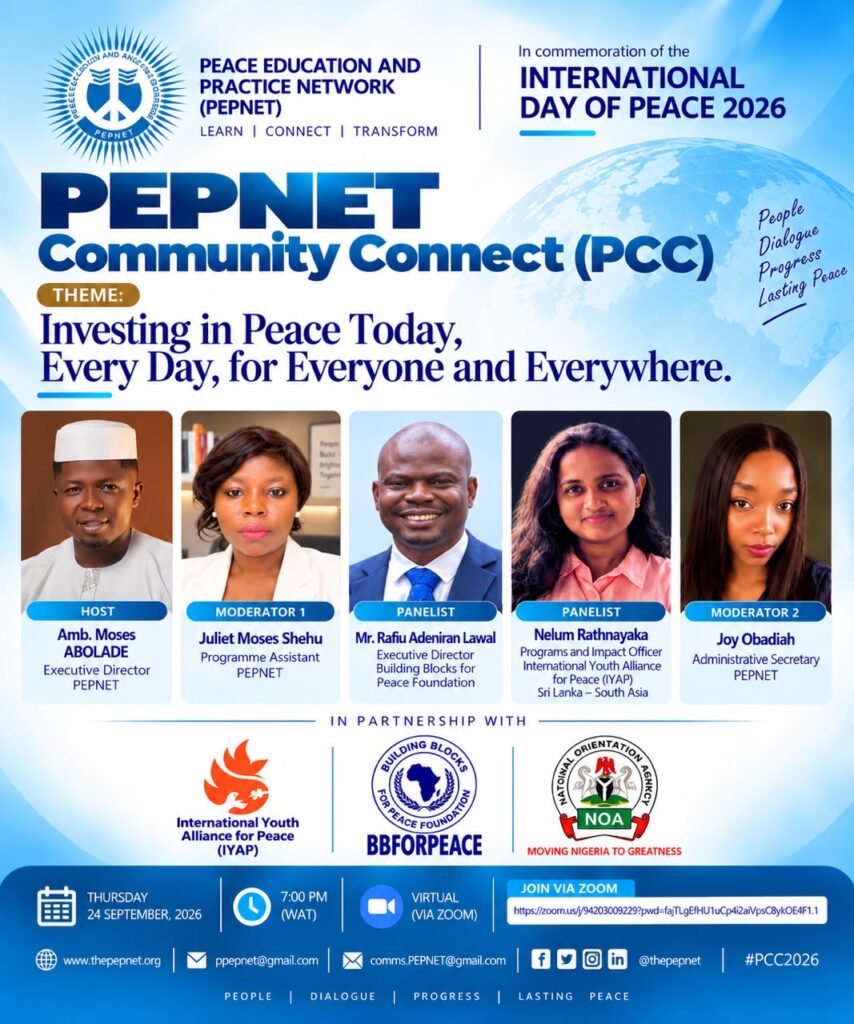
The Peace Education & Practice Network (PEPNET) marked the 2026 International Day of Peace with a special edition of PEPNET Community Connect (PCC), bringing together peacebuilders, partners, members of the PEPNET community, young people and community stakeholders for a conversation on investing in peace through everyday action.
Held on 24 September 2026, the virtual programme explored the meaning of peace investment, the role of young people and communities, the importance of peace education, climate and peacebuilding, and the collective responsibility required to build peaceful and inclusive societies.
The programme, moderated by Ms Juliet Moses Shehu, Programme Assistant, PEPNET, also provided an opportunity to formally introduce members of PEPNET’s newly constituted 11-member Advisory Council and reflect on the organisation’s ongoing efforts to make peace education and peacebuilding more accessible, practical and community-driven.
In his opening remarks, Amb. Moses ABOLADE, Executive Director, PEPNET, reflected on the significance of the International Day of Peace theme and challenged participants to see peace not simply as an aspiration, but as an investment.
He emphasised that investment in peace is not limited to financial resources. Time, knowledge, education, relationships, opportunities, partnerships, platforms and everyday choices are all investments that can contribute to peaceful societies.
Reflecting on PEPNET’s work, he highlighted the organisation’s efforts across peace education, school and IDP community engagements, the CPC: CLIMPSE programme, peace education publications, Peace Media, knowledge-sharing initiatives, articles and community platforms such as Peace Lovers Connect and PEPNET Community Connect.
The reflection also drew attention to the cost of violence. Conflict can take lives, displace families, disrupt education and livelihoods, weaken relationships and deprive communities of development opportunities.
Against this backdrop, the message was simple:
Investing in peace today is an investment in the possibilities of tomorrow.
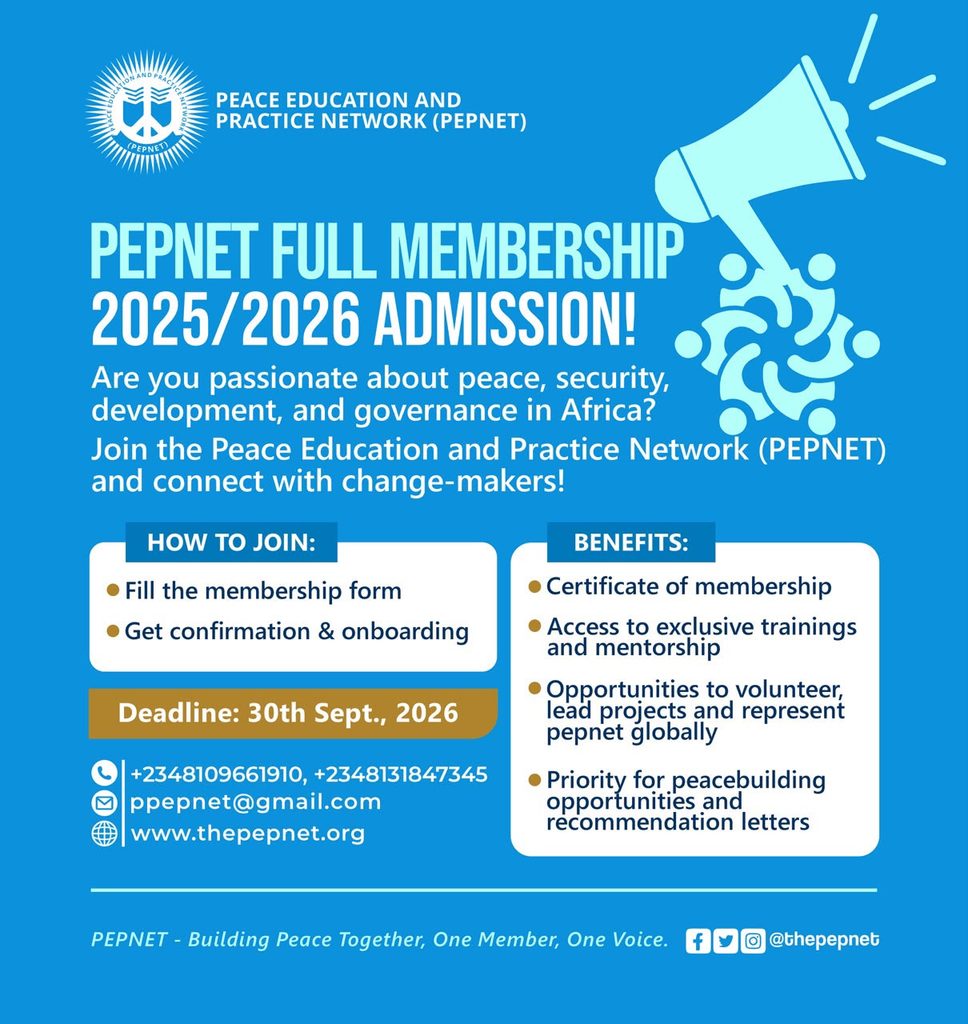
Amb. Moses also encouraged participants to become part of PEPNET’s growth and sustainability by becoming Full Members, purchasing PEPNET resources, supporting programmes, volunteering, building partnerships and contributing their knowledge, networks and expertise.
Following the call to deepen engagement with PEPNET, Mr Jonathan Aliyu Saba, Programme Officer, PEPNET, provided a brief introduction to PEPNET, highlighting its mission, key programmes, community platform and opportunities for individuals and organisations to connect, participate and support its peacebuilding work.
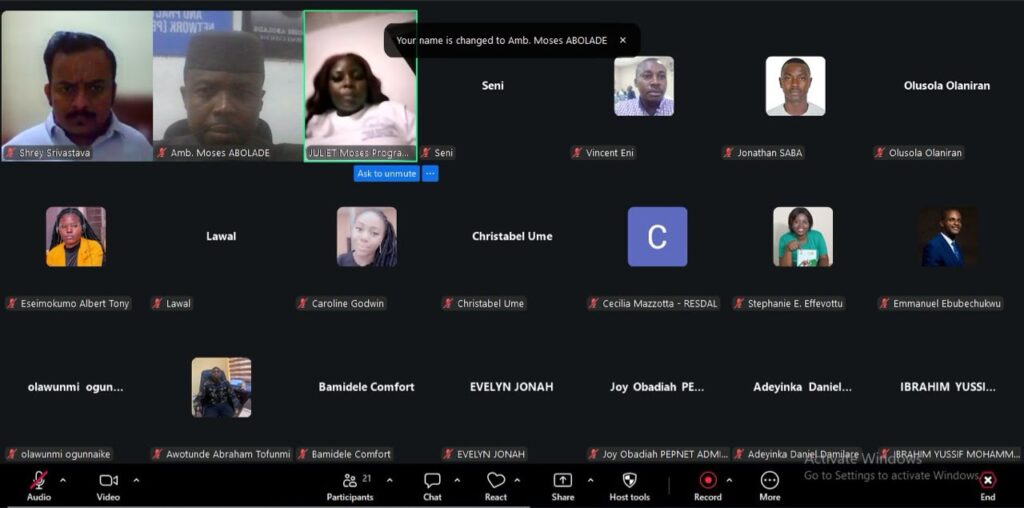
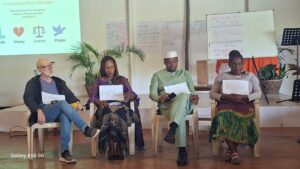
A significant moment of the programme was the introduction of members of PEPNET’s newly constituted 11-member Advisory Council.
The Council brings together individuals with diverse professional, academic and peacebuilding experience from Nigeria and beyond. Members introduced during the session included:
The introductions connected the new Council with the wider PEPNET community and allowed members to share their perspectives and reaffirm their commitment to supporting PEPNET’s institutional development, partnerships, and long-term vision.

The Partners Panel brought together Ms Nelum Rathanayaka of International Youth Alliance for Peace (IYAP) and Mr. Rafiu Adeniran Lawal of Building Blocks for Peace Foundation.
Joy Obadiah led the panel discussion, with Amb. Moses ABOLADE subsequently engaged in the conversation when Joy experienced network difficulties.
A major focus of the discussion was the need to invest in people, particularly young people.
Ms Nelum challenged the tendency to describe young people merely as beneficiaries or as “the future of peacebuilding”. She emphasised that young people are already experiencing challenges within their communities and are actively contributing to solutions.
She also stressed that investment in peace does not always require money. Providing young people with time, knowledge, connections, platforms, mentorship and opportunities can be equally significant.
One of the most important questions emerging from the conversation was:
“Now that you have learnt, what will you do with what you have learnt?”
The question captured the importance of moving from awareness to action and from participation to meaningful community impact.
The discussion further challenged the perception that peacebuilding must always take place through large conferences or formal programmes.
Peacebuilding can happen in a classroom, at home, within a community, online and through everyday relationships.
Mr Olusola Olaniran of the Institute for Peace and Conflict Resolution (IPCR) reflected on activities undertaken to mark the International Day of Peace, including peace walks, peace lectures and engagements with IDP communities.
He also raised the importance of listening to young people and understanding how they want to participate in shaping their future.
Ms Olawunmi Ogunnaike reinforced the importance of peace awareness in schools, highlighting how educating young people can influence families and communities beyond the classroom.
These reflections aligned closely with PEPNET’s approach to peace education: reaching people where they are and equipping them with knowledge and practical tools to contribute to peace.
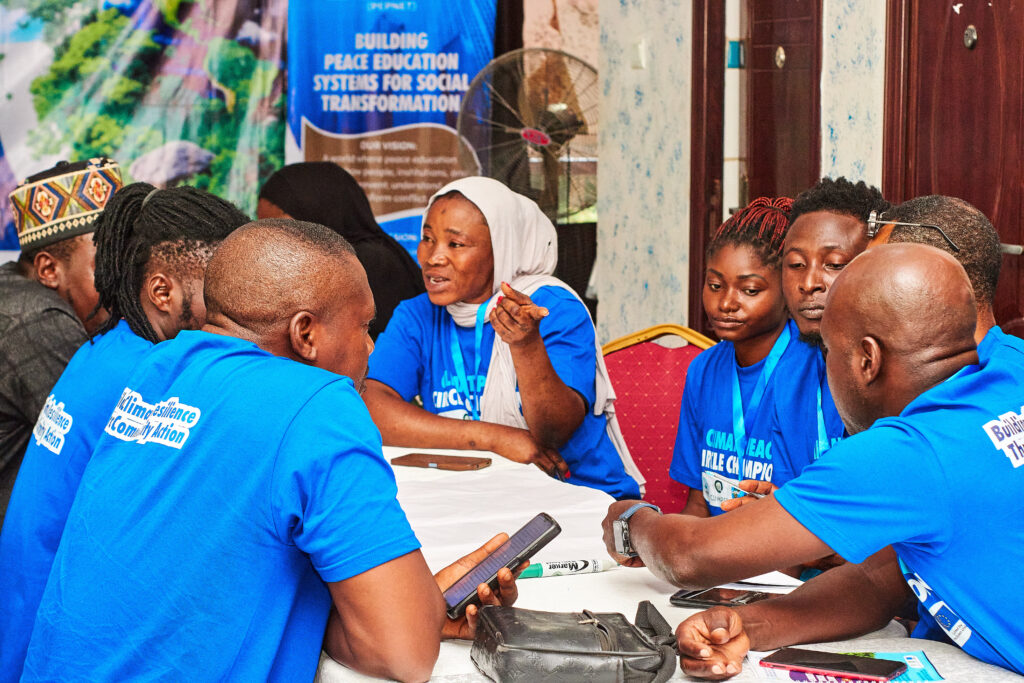
The programme also featured reflections from PEPNET’s Climate Peace Circle (CPC) initiative.
Mr Olusola Olaniran highlighted environmental and climate-related challenges affecting communities in Mpape and emphasised the responsibility of individuals and communities to contribute to solutions.
The conversation reinforced the growing importance of understanding the links between climate, peace and security, particularly as environmental pressures can interact with existing social and community vulnerabilities.
This connects directly with PEPNET’s CPC: CLIMPSE initiative, which promotes community-led engagement around climate, peace and security.
Another important strand of the discussion focused on the origins and dynamics of conflict.
Mr Shrey Srivastava reflected on how conflict can develop through everyday human interactions, drawing attention to the importance of communication, relationships and how people respond to differences.
Participants also explored the complexity of chieftaincy and land-related disputes, with issues around power, access and scarcity identified as factors that can make such conflicts particularly difficult to resolve.
The discussion reinforced the importance of peacebuilding approaches that address both individual behaviour and wider structural conditions that can contribute to conflict and instability.
The Q&A session provided an opportunity for participants to explore how governments, organisations, communities and individuals can invest in positive peace for future generations.
A particularly powerful reflection came from Mr Shrey:
“You cannot fragment peace.”
The statement captured a central lesson from the programme: peace is interconnected.
Education, youth participation, inclusion, community resilience, relationships, governance, opportunity and social justice all form part of the broader peacebuilding ecosystem.

Madam Charity further emphasised the importance of personal responsibility:
“Peace must begin with us. The change we are desiring needs us to start the change.”
She also stressed that young people need guidance and cannot be expected to build peace alone. Sustainable peace requires collaboration among universities, researchers, technology experts, communities, civil society organisations and other stakeholders.
The programme produced several important outcomes:
1. A stronger Advisory Council network
The newly constituted 11-member Advisory Council was introduced to the wider PEPNET community, creating a stronger platform for strategic guidance, expertise and institutional development.
2. Deeper partnership engagement
The programme strengthened connections between PEPNET and partner organisations working across peacebuilding, youth development, education and community action.
3. Greater emphasis on youth as peacebuilders
The discussion reinforced the need to recognise young people as active participants and changemakers rather than only beneficiaries or future leaders.
4. Greater focus on practical peace education
Participants reflected on taking peace education into schools, communities, families and everyday spaces.
5. Stronger understanding of climate and peace linkages
The CPC discussion connected community environmental challenges with broader questions of peace, security and resilience.
6. Increased emphasis on individual responsibility
The programme reinforced the message that peace begins with everyday choices and that everyone has a role to play.
7. Movement from dialogue towards action
Participants were encouraged to translate what they learn into practical action within their communities.
8. Greater engagement with PEPNET’s peacebuilding movement
Participants were invited to support PEPNET through Full Membership, purchasing PEPNET resources, volunteering, partnerships, programme participation and other forms of contribution.
For PEPNET, the International Day of Peace is not simply an annual celebration. It is a reminder of the work that must continue every day.
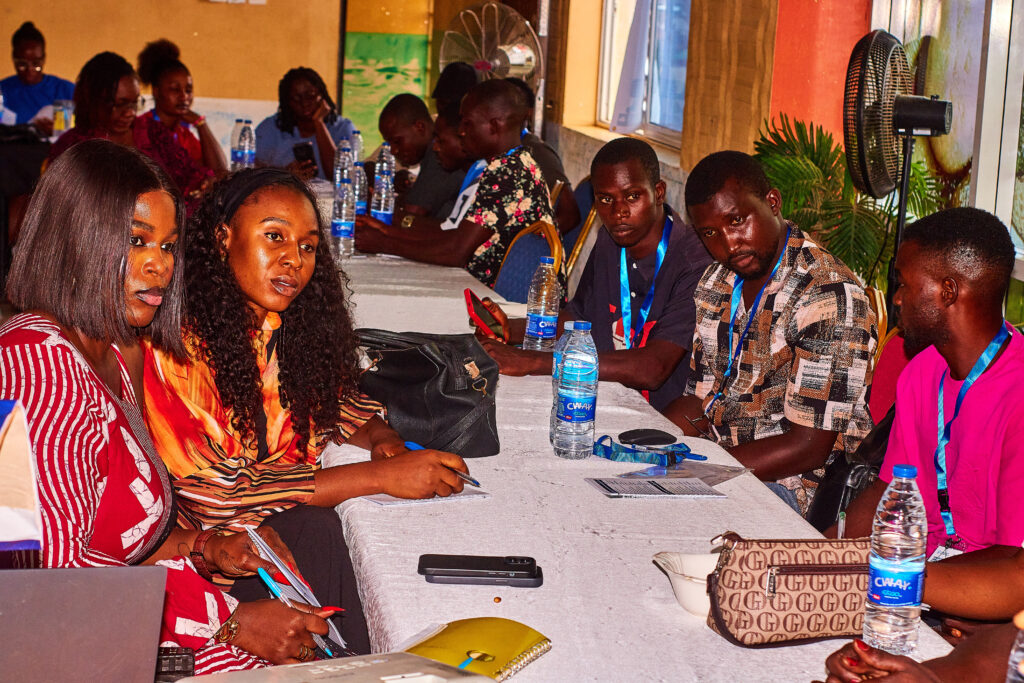
PEPNET’s investment in peace is reflected in its continuing work across peace education, school and IDP community engagements, youth development, CPC: CLIMPSE, peace education publications, Peace Media, knowledge sharing, Peace Lovers Connect and PEPNET Community Connect.
The organisation believes that meaningful peacebuilding can begin with seemingly small actions.
A lesson can influence a child.
A conversation can change a perspective.
A young person given an opportunity can become a community changemaker.
A partnership can open a new pathway.
A book can equip a peace educator.
A community conversation can prevent a misunderstanding from becoming a conflict.
These actions may appear small individually, but together they can contribute to long-term peace.
As PEPNET continues to grow its community and expand its peace education and peacebuilding work, it is inviting more people and institutions to become part of the journey.
There are many ways to invest in peace with PEPNET:
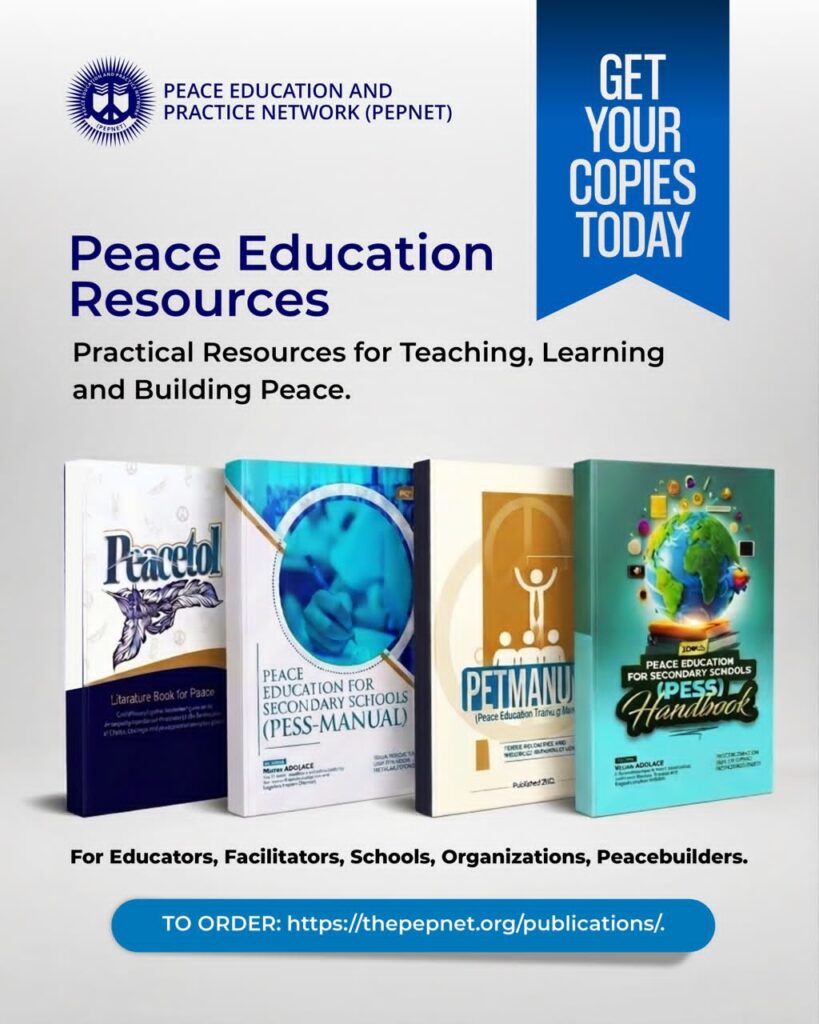
Purchase PEPNET books and peace education resources
Support or partner with PEPNET programmes.
Join the PEPNET Community here to:
Share peacebuilding knowledge and opportunities.
Connect PEPNET with schools, communities, institutions and potential partners.
Every contribution matters.
The peace we want to see tomorrow will depend, in part, on the investments we are willing to make today.
Peace begins with us.
Watch the recording:
Watch the full PEPNET Community Connect recording
Report prepared by:
Seniloba Taiwo
Communication Assistant, PEPNET